
Wichita During World War II
During World War II, Wichita, Kansas, played a pivotal role in supporting the Allied war effort through its vital contributions to the aviation industry. Dubbed the “Air Capital of the World,” Wichita housed several major aircraft manufacturing companies that produced a vast number of aircraft crucial for military operations.
The Role of Wichita’s Aviation Industry
The emergence of Wichita as a leading force in aviation did not occur overnight. By the outbreak of World War II, the city had already been recognized as a key center for aircraft production. This development was significantly supported by the establishment of renowned manufacturers, including Boeing, Cessna, and Beechcraft, which had set up pivotal production facilities in the area.
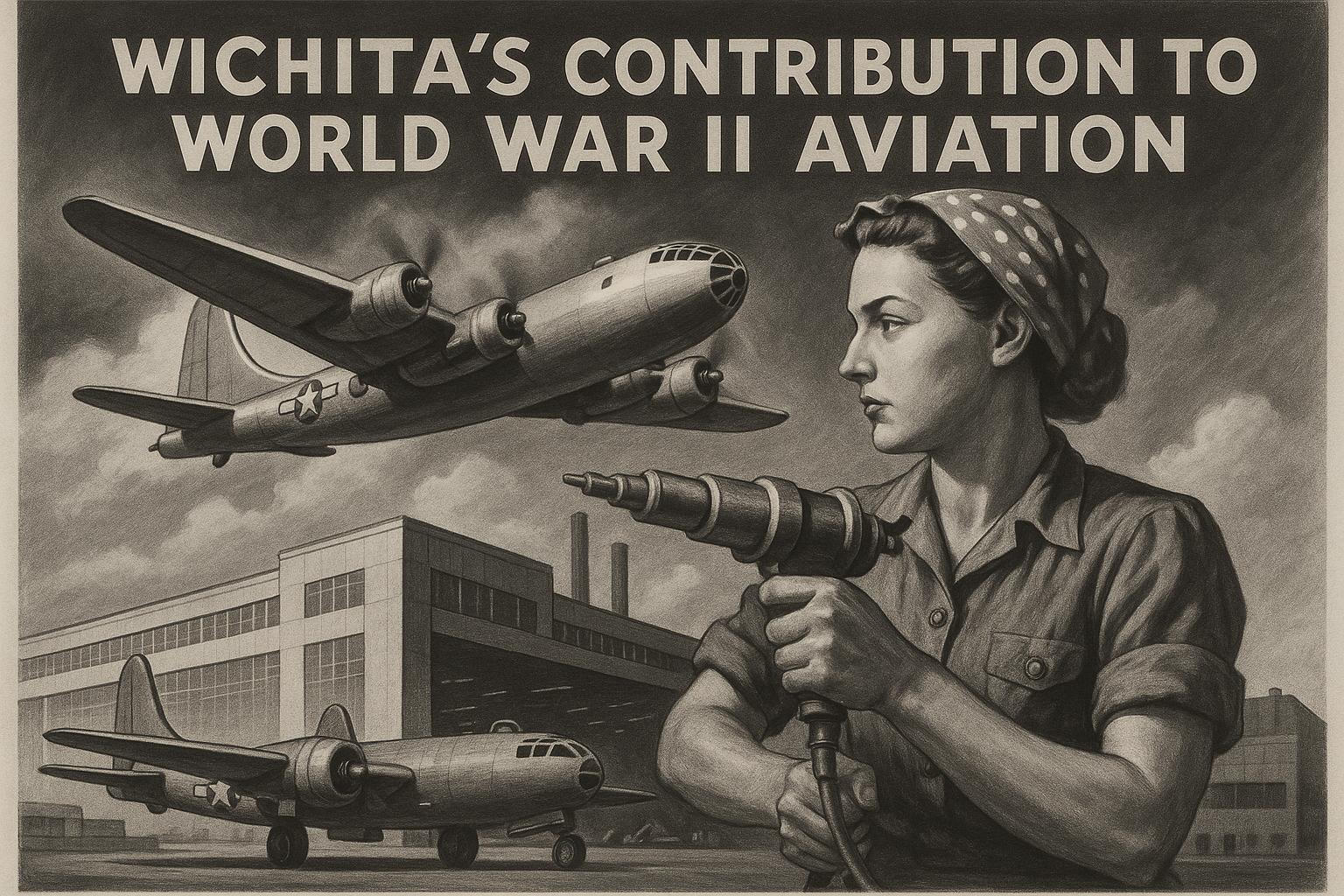
The Boeing Wichita Division was particularly noteworthy for its substantial contributions. Originally part of Stearman Aircraft, Boeing’s Wichita division became indispensable in the wartime production of bombers and various military aircraft. A prominent model manufactured here was the B-29 Superfortress, a long-range bomber that played a crucial role in strategic bombing missions throughout the war.
Production Milestones
Wichita’s aviation industry demonstrated remarkable production capabilities during World War II. The city’s factories rolled out thousands of aircraft, positioning Wichita as a central production hub for Allied air power. The mass-produced aircraft, including the B-29, were not only vital to the war campaign but also highlighted Wichita’s industrial capacity and the relentless dedication of its workforce.
Workforce and Community Impact
The drive to support the war effort spurred significant economic growth in Wichita, thereby escalating demand for labor. This surge in labor requirement opened up numerous opportunities, drawing thousands of workers, including many women who stepped into roles traditionally dominated by men. These women, often referred to as “Wichita’s Rosie the Riveters,” played an integral role in maintaining the smooth operation of production lines. Their contributions underscored the broader American industrial mobilization and reflected the adaptive spirit necessary to meet wartime production demands.
The city’s remarkable achievements in aircraft production symbolized the success of collective action and the ability to swiftly pivot industrial efforts during times of national need. Wichita’s example demonstrated that communities could adapt and respond effectively to the pressures of wartime demands.
Legacy and Continued Influence
The outstanding contributions made by Wichita to World War II aviation left a lasting legacy on the city and the broader aviation industry. Following the war, Wichita continued to expand its aviation sector, further cementing its status as a critical aviation hub.
For those interested in exploring Wichita’s rich aviation history further, a plethora of resources and historical documents are available that delve into this transformative era. One can access historical archives or visit local museums to gain comprehensive insights into Wichita’s integral role during World War II and its enduring influence on aviation.
The story of Wichita during World War II is one of industrial triumph, community spirit, and significant transformation. As a city that embraced the challenges presented by the war, Wichita not only bolstered the Allied forces through its robust production capabilities but also showcased the potential of American industry to adapt and excel under intensified conditions. This narrative remains an inspiring testament to the power of innovation and collective effort in shaping the course of history.